
Blog

  • How to Efficiently Claim the ERC Tax Credit in 2025

    How to Efficiently Claim the ERC Tax Credit in 2025


    Are you a business owner curious about the Employee Retention Credit (ERC) for your business? The Relief Consultants understand the complexities of Internal Revenue Service (IRS) requirements and can help you accurately calculate and file your ERC before the deadline. This article outlines the essential steps to correctly prepare and file your Employee Retention Tax Credit (ERTC) application, address common challenges, and avoid fraud, ensuring you maximize your benefits in 2025.

    What Is the Employee Retention Credit?

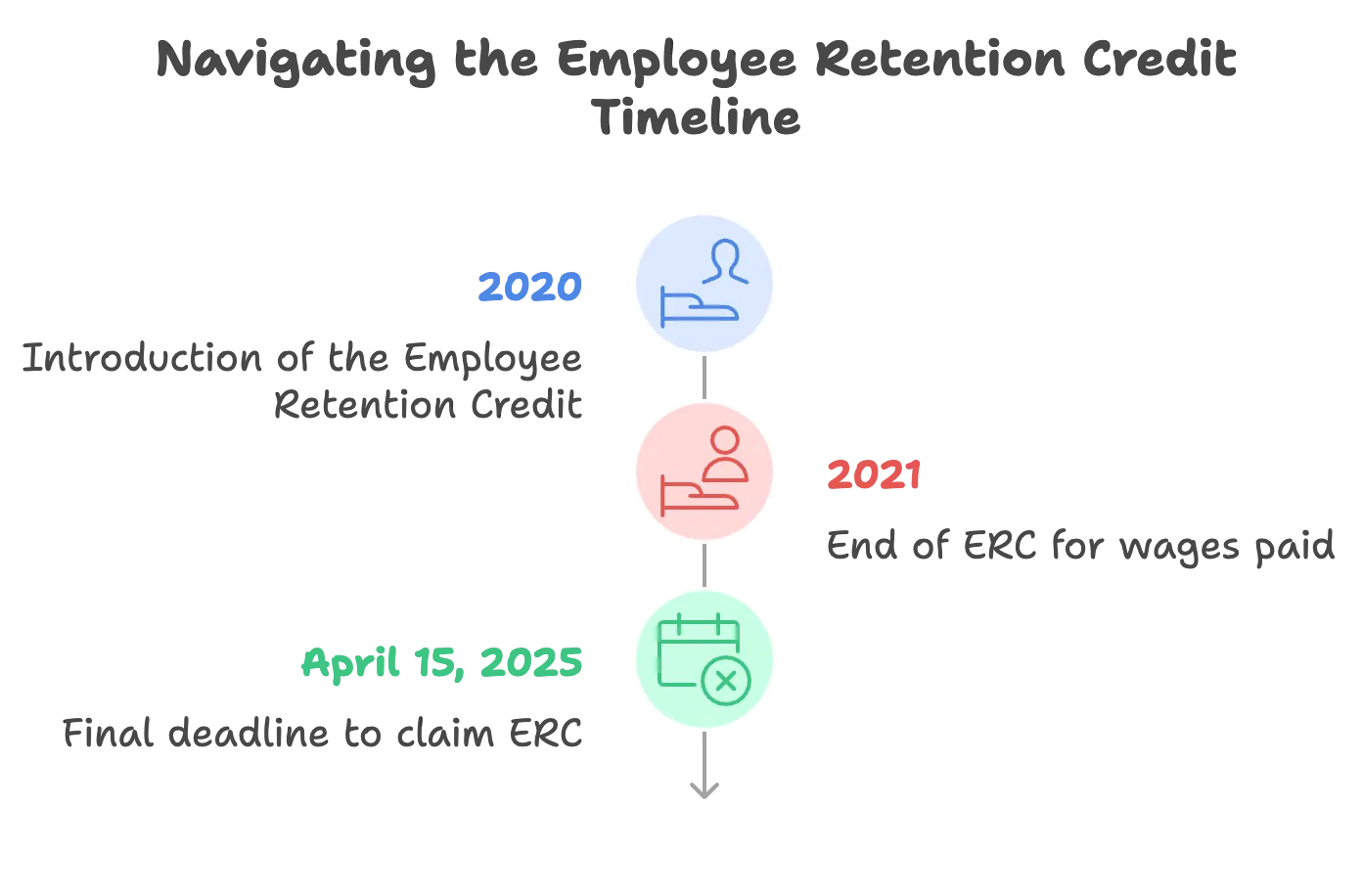
    The Employee Retention Credit was introduced as part of the CARES Act in 2020 to help businesses retain employees during the economic uncertainty caused by the COVID-19 pandemic. This refundable tax credit is available to eligible employers that retained employees during specific periods in 2020 and 2021. By offsetting payroll taxes, the ERC provides a significant financial boost to qualifying businesses, potentially amounting to tens or hundreds of thousands of dollars in refundable credits.

    The ERC is based on a percentage of qualified wages paid to employees during eligible quarters. While the program ended for wages paid after 2021, businesses still have the opportunity to retroactively claim the ERC by amending payroll tax filings—but only until the ERC deadline of April 15, 2025. Missing this deadline means losing the ability to claim this credit altogether.
    Claiming the Employee Retention Credit on Your Own

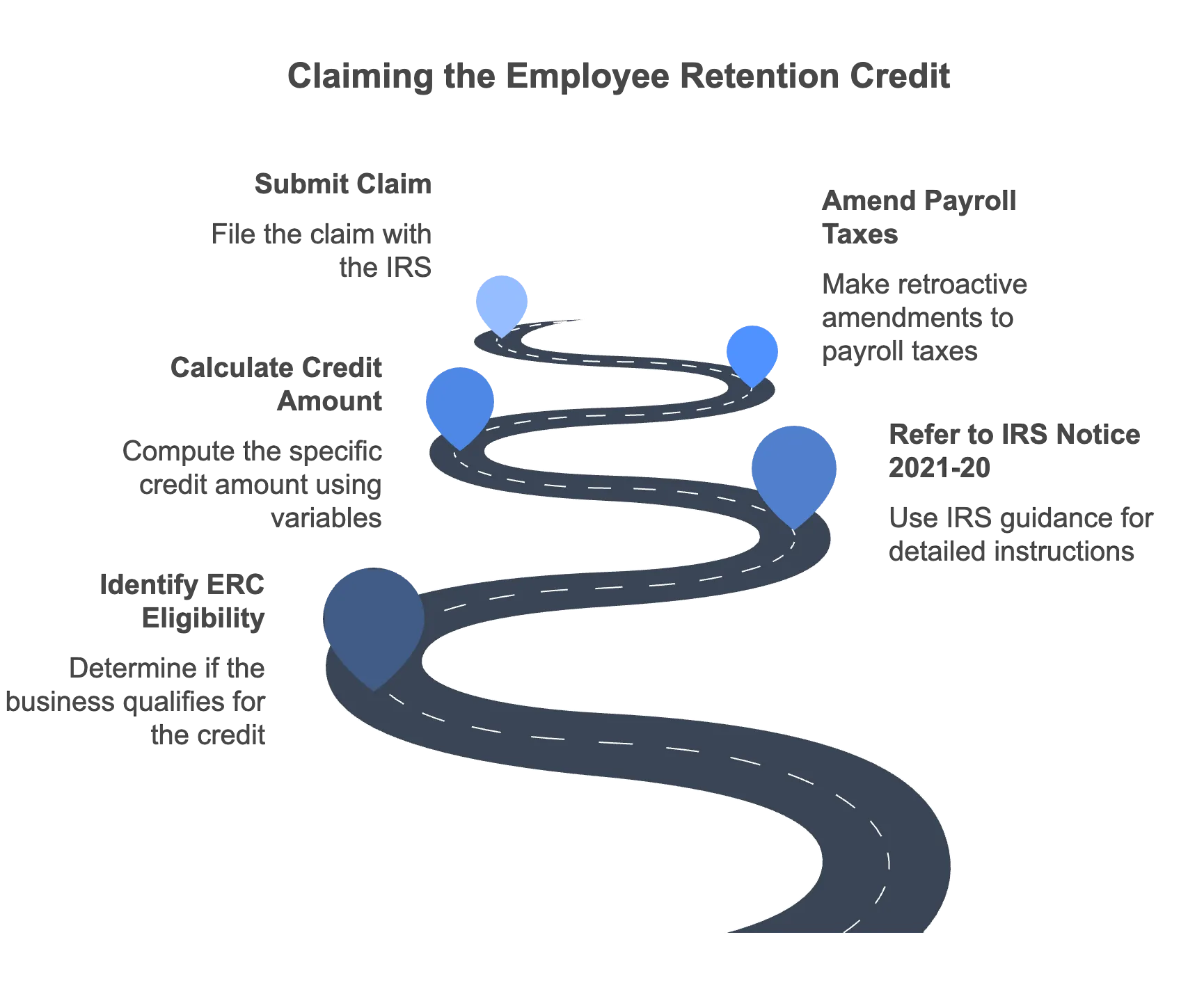
    The Employee Retention Credit can be claimed independently by making retroactive amendments to your payroll taxes. A good starting point for understanding the credit is IRS Notice 2021-20, which provides detailed guidance. However, calculating the specific credit amount and meeting the eligibility requirements involves dozens of variables and a complex web of rules.

    If you choose to claim the ERC on your own, it will likely take 5 to 12 weeks to fully understand the credit and its requirements. The eligibility criteria are nuanced, involving revenue decline tests, operational suspension tests, and specific rules regarding qualified wages. Misinterpreting even one of these rules could lead to an incorrect filing and potential denial of your credit.
    At The Relief Consultants, our team undergoes a three-month training program to master all aspects of the ERC before assisting business owners. This rigorous preparation ensures our consultants are well-versed in every nuance of the program, giving you peace of mind that your claim is accurate and maximized.

    Attempting to claim the ERC yourself without a clear understanding of the process may result in delays, missed opportunities, or outright denial. While it is possible, you’ll need to assess whether you have the time and resources to commit to the task. If you’re busy managing your business, learning the ins and outs of the tax credit will be an uphill challenge.

    Using a Firm to Claim the Credit

    Using a professional firm to claim the Employee Retention Tax Credit is often the most efficient and reliable option. However, not all firms are created equal. Here’s what to look for:

    • Comprehensive Qualification Testing: Ensure the firm conducts thorough eligibility checks. Some firms shortcut the process, filing claims with inflated amounts in hopes the IRS won’t catch the discrepancies—an approach that could expose you to audits or penalties.
    • Experience and Expertise: A trusted firm like The Relief Consultants has a proven track record, backed by trained consultants who understand the intricate rules of the ERC program. Our team’s specialized training ensures that your claim will meet all IRS guidelines.
    • Documentation and Transparency: Choose a firm that provides detailed documentation to support your claim. Avoid firms that fail to maintain clear records or rely on vague estimates. Proper documentation is essential for surviving a potential IRS audit.
    • End-to-End Support: Look for a firm that handles the entire process, from determining eligibility to filing the claim and responding to IRS inquiries. This ensures you’re supported every step of the way.

    By choosing a firm with the right expertise, you can save time, reduce risks, and maximize your refund. The Relief Consultants offer all of these benefits, providing you with the confidence that your claim will be accurate, complete, and fully compliant.

    How to File for the ERC in 2025

    Preparing Documents to Expedite the ERC Process

    If you decide to work with a firm to claim the Employee Retention Tax Credit, having the following documents ready will streamline the process:

    1. Payroll Detail Report

    This key report lists all checks sent to employees from March 13, 2020, to December 31, 2021. Obtain this from your payroll software. If you used multiple payroll providers during this period, you’ll need reports from each.

    For step-by-step instructions from major payroll software providers like ADP, QuickBooks Online, Gusto, and Paychex, visit this specifically designed step-by-step web page which covers instructions for most major Payroll Software Providers on how to generate your payroll detail report for the ERC.

    2. Quarterly Revenue Information

    This data is used to conduct the Revenue Decline Test. Gather gross receipts (not net profit) for all 12 quarters from 2019, 2020, and 2021. These numbers are typically found on quarterly Profit & Loss statements. Having accurate revenue data is critical for determining eligibility and ensuring your claim is accurate.

    3. Form 941 Quarterly Payroll Tax Reports

    Collect your Form 941s for the following periods:

    • 2020: Quarters 2, 3, and 4
    • 2021: Quarters 1, 2, 3, and 4

    These reports are available in your payroll tax software and provide essential information about wages and taxes paid.

    4. Documentation for Operational Suspension

    If your business experienced a full or partial suspension of operations due to government orders during the pandemic, gather any relevant documentation to support your claim. This could include government directives, industry-specific mandates, or other evidence demonstrating the impact on your operations.

    Having these documents ready will allow a firm to quickly assess your eligibility for the ERC. While additional information may be required depending on your specific circumstances, these reports will provide 90% of the necessary data.

    The IRS ERC Moratorium

    Due to an overwhelming amount of claims and the ineligible claims submitted by bad actors, the IRS imposed an ERC processing moratorium on September 14, 2023. This moratorium lasted nearly one year, with effectively no claims being processed from September 2023 to September 2024. In September 2024, however, the moratorium was lifted, and new claims were finally processed.

    The moratorium created significant financial challenges for many businesses that had planned to receive their ERC funds within the typical three-month processing period. Processing times are now expected to take longer. However, because the ERC is a law written by the United States Congress, claims that meet eligibility criteria must be processed. While delays are possible, valid claims cannot be denied outright due to the moratorium.

    Businesses should not let the moratorium discourage them from filing their Employee Retention Credit claims. Delays in payment are inconvenient, but the potential financial benefits of the ERC far outweigh the waiting period. If your business qualifies, filing as soon as possible ensures you’re in the queue for processing.

    Why Start Now?

    The deadline to claim the Employee Retention Tax Credit is April 15, 2025. At the time of writing, this leaves just over 100 days. The process generally takes 1–2 weeks if all required documents are available, so starting now is crucial.

    Waiting until the last minute can result in rushed filings, incomplete documentation, and missed opportunities to maximize your credit. Don’t let procrastination cost you thousands of dollars in refunds—start gathering your documents and working with a trusted firm today.

    The Relief Consultants’ Expertise

    Since 2020, The Relief Consultants have been dedicated to helping business owners secure refunds from state governments, the IRS, and other grants and credits. Our team has worked closely with the IRS on the Employee Retention Credit (ERC) program since 2022, establishing a reputation as leaders in this space.

    Under the leadership of Chris Gitre, Founder & CEO, The Relief Consultants have focused on making the ERC accessible and impactful for business owners across industries. We’ve helped hundreds of businesses recover millions of dollars in refundable credits, and we’re ready to do the same for you.

    Take Action Today

    For personalized assistance, contact The Relief Consultants and let our team of experts handle the complexities, so you can focus on growing your business. Don’t wait until it’s too late—schedule a call today and get your claim in before the April 15, 2025 deadline.

    ERC IRS Frequently Asked Questions (FAQs)

    1. What is the Employee Retention Credit (ERC)?

    The ERC is a refundable tax credit for businesses that retained employees during the COVID-19 pandemic. It offsets payroll taxes and is based on a percentage of qualified wages paid during eligible periods in 2020 and 2021.

    2. Can I still claim the ERC in 2025?

    Yes, you can retroactively claim the ERC by amending payroll tax filings. However, the deadline to file for the credit is April 15, 2025.

    3. How do I know if my business qualifies for the ERC?

    Qualification depends on factors such as revenue decline, operational suspension due to government orders, and the wages paid to employees during the eligibility period. A professional firm can help you assess eligibility.

    4. What documents do I need to claim the ERC?

    Key documents include Payroll Detail Reports, Quarterly Revenue Information, Form 941 Quarterly Payroll Tax Reports, and documentation for operational suspensions (if applicable).

    5. How long does it take to file an ERC claim?

    If all documents are prepared, the process typically takes 1–2 weeks. However, learning the requirements and gathering documents may take longer if filing independently.

    6. Can I claim the ERC on my own?

    Yes, but the process is complex and time-intensive. It may take 5–12 weeks to fully understand the credit and prepare a claim accurately. If you need application assistance, the Relief Consultants can assist you in learning more about how to claim.

    7. Why should I use a firm like The Relief Consultants?

    Using a professional firm ensures accurate claims, maximized refunds, and compliance with IRS rules. The Relief Consultants’ team has extensive training and experience in handling ERC claims.

    8. What happens if I file an incorrect ERC claim?

    Filing an incorrect claim can lead to delays, audits, or penalties. It’s essential to follow all IRS guidelines and provide accurate documentation.

    9. How much can my business receive through the ERC?

    The exact amount depends on qualified wages, the number of employees, and eligibility criteria. Businesses may be eligible for tens or hundreds of thousands of dollars in refundable credits.


  • ERC Director: Despite the Moratorium, Businesses should Continue to Submit Legitimate ERC Claims

    ERC Director: Despite the Moratorium, Businesses should Continue to Submit Legitimate ERC Claims

    ERC Director: Despite the Moratorium, Businesses should Continue to Submit Legitimate ERC Claims

    By Chris Gitre
    Founder, CEO
    The Relief Consultants

    Members of The Relief Consultants’ expert team joined numerous stakeholders in attending the informative IRS webinar focused on the ERC moratorium. During this session, the IRS ERC Program Director delivered a crucial message that promises to shape the strategies of many businesses moving forward.

    Despite the moratorium on the ERC, the Program Director emphasized that companies with legitimate claims should continue to apply. This guidance comes as a beacon of assurance to businesses that have been grappling with uncertainty about the future of their ERC claims. It underscores the government’s recognition of the importance of supporting businesses that have sustained employment throughout the challenging economic times.

    The Relief Consultants echoes the IRS’s sentiment and strongly encourages eligible businesses to take action. The moratorium, while signaling a temporary halt, does not close the door on valid claims. This is a vital distinction that can have a significant impact on a company’s financial health.

    As a leader in financial consulting, The Relief Consultants specializes in aiding businesses to navigate the complexities of tax credits and incentives. With this latest information from the IRS, our team is poised to offer unparalleled guidance and support in the ERC claims process. We are committed to leveraging our expertise to ensure that our clients maximize their legitimate claims under the current regulatory framework.

  • IRS Announces New Tool to Combat ERC Fraud

    IRS Announces New Tool to Combat ERC Fraud

    Greetings, ladies and gentlemen. I am the CEO of The Relief Consultants, and today, I am pleased to share some exciting news with you. Before we dive into it, let’s delve into the IRS’ new tool to combat ERC fraud.

    Opportunistic Actors and the Complex ERC Program

    The IRS has recently introduced a new capability that allows businesses to withdraw their Employee Retention Credit (ERC) claims. Now, you might be wondering why such a provision exists. Well, it’s because of a group we’ll call ‘opportunistic actors’ — these are the folks who often inundate business owners with incessant direct mailers and bothersome phone calls. What’s noteworthy is that these ‘opportunistic actors’ occasionally went to great lengths, including a complete disregard for the program’s requirements, to intentionally over-qualify clients for the ERC. Crafty, isn’t it?

    Now, here’s the deal: The ERC is one tricky program. It’s like trying to solve a puzzle made of tax codes and government rules. You really need to know your stuff to navigate it correctly.

    Introducing The Relief Consultants’ Qualification Matrix

    So, in light of the IRS’s announcement, we’ve got some exciting news of our own. At The Relief Consultants, we take the ERC seriously. We’ve been helping our clients with government grants and tax programs for the past three years, and in 2022, we added the ERC to our list of expertise.

    To make sure everything’s crystal clear, we’ve launched a new feature in our client portal called the “Qualification Matrix.” Now, you might be thinking, “What’s that?” Well, it’s like a detailed map that shows you exactly why your company qualifies for the ERC.

    What’s Inside the Qualification Matrix?

    • Quarterly Breakdown: The matrix tells you how many quarters your company qualifies for and which ones specifically.
    • The Why: It explains the exact reasons your company qualifies for each quarter.
    • Government Orders: For quarters where your eligibility hinges on a full or partial suspension of business operations, the matrix will even include the government order that caused it. You’ll know precisely what the order said.
    • Operational Impact: We’ll also spell out how the government order affected your business. How did your business specifically meet the eligibility for the ERC? You’ll know.
    Qualification Matrix V1

    We Play by the Rules

    At The Relief Consultants, we don’t mess around. When we develop an eligibility opinion for your ERC claim, we use the same requirements the IRS would use in an audit. That means every document you need for an audit is right there, ready to go. No surprises!

    And here’s the kicker: In the rare event that the IRS requests information about your company’s ERC, The Relief Consultants steps in to assume all ERC-related communications. We’ll point the IRS to how your company legitimately claimed the ERC, allowing you to focus on the tasks that matter most to your business — all with peace of mind.

    Coming Soon: Your Access to the Qualification Matrix

    Exciting news, folks! The Qualification Matrix is up and running, and in the next 10 days, every single one of our clients will have access to it. Yes, you heard that right — everyone!

    Reach Out, We’re Here for You

    We’ve also got something special for you. In the portal, you’ll find a direct line to your assigned consultant. If you ever want to chat about your Qualification Matrix or need more info for your peace of mind, they’re just a call or message away.

    So, there you have it, our brand-new way to make sure your business is sailing smoothly through the ERC maze. We’ve got your back, and we’re ready to help you understand the ins and outs of the ERC. Stay tuned for more exciting updates from The Relief Consultants!

    A Helping Hand, Even if You’re Not Our Client

    At The Relief Consultants, we believe in doing what’s right, even if you’re not yet a part of our family. We understand that in the rush to navigate the complexities of the ERC, some businesses might have unknowingly contracted opportunistic “ERC Mill” actors to complete their claims.That’s why we want to extend a helping hand. If you find yourself in this situation, if you’re not a client of ours but have concerns about your ERC claim, we’re here for you. We’re happy to review your claim free of charge, potentially withdraw any inaccurate claims, and resubmit your credit within the eligibility guidelines. Your financial well-being matters to us, and we’re committed to ensuring that your ERC claim is accurate and in compliance with IRS regulations. Don’t hesitate to reach out, and let’s make sure you get the support you need, whether you’re a part of our client family or not.

    By Chris Gitre
    Founder, CEO
    The Relief Consultants

  • Latest Insights & Speculation about the ERC — a Message from our Founder

    Latest Insights & Speculation about the ERC — a Message from our Founder

    Findings & Insights from The Relief Consultants’ Founder, Chris Gitre

    On September 14th, the IRS announced a significant moratorium on the Employee Retention Credit (ERC), adding uncertainty to the timeline of many businesses’ ERC claims. The moratorium heralds two pivotal changes: an increased processing time for claims filed prior to September 14th and a complete halt on claims processing for submissions made on or after this date until January 1st, 2024.

    Since the announcement, The Relief Consultants have engaged with numerous IRS agents and meticulously tracked all ERC-related communications from government channels. Our findings present the following:

    The Current State of ERC Claims Processing

    It’s clear that the IRS has temporarily ceased processing ERC claims. Not a single client has reported receiving their anticipated refund since the moratorium’s commencement. This halt is in contrast to the IRS’s initial intimation that only processing times would lengthen. The Relief Consultants perceive this as misleading, as the current situation is not a mere delay but a complete cessation of claim processing.

    on X.com, user @danchodan leads the way about providing material updates to the ERC

    Our analysis suggests that the IRS may be developing advanced fraud detection methods, possibly leveraging technology to automate the rejection of spurious claims. This endeavor could potentially streamline the process, swiftly filtering out illegitimate claims and advancing valid ones for further examination.

    One method for detecting fraudulent activity could involve analyzing the ratio of ERC credit to wages reported on Employer Quarterly Tax Filings (Form 941s). IRS representatives have hinted at disqualifying claims that surpass an “expected credit,” based on a preset percentage of declared wages.

    Additionally, we’ve learned that the IRS might scrutinize claims where the authorized signer on the 941x form lacks a prior association with the business tax account. While this could be an effective audit tool, it may inadvertently delay legitimate claims from businesses with new financial officers.

    While the IRS’s complete plans to safeguard the integrity of taxpayer funds remain unclear, it is evident that they are fortifying their defenses against fraud. The full resumption of ERC claim processing is likely contingent on the successful implementation of these new measures.

    The Wisdom of Submitting ERC Claims During the Moratorium

    Despite the moratorium, The Relief Consultants stand by the wisdom of continuing to submit ERC claims, provided they are legitimate. Echoing sentiments from the IRS Tax Professional Webinar regarding the Moratorium, the Director of the ERC program ensured that submissions during this period will secure a place in the processing queue once the IRS resumes its operations.

    Contrary to the shocking (and concerning) advice of some IRS phone agents and one representative of an uninterested PEO, suggesting that submitting before 2024 is useless, we believe in the simple logic of queuing: to receive something valuable, one must be in line for it.

    The Future of the ERC Program

    The ERC, being encoded in law, is not subject to arbitrary changes by the IRS; only an act of Congress could curtail the program prematurely. Recent inquiries from the House Ways and Means Committee to IRS Commissioner Werfel have begun the conversation of legislative action related to the ERC. However, it seems unlikely that Congress would risk public censure by ending a relief program that many American businesses could receive yet still have still not applied for.

    It is more plausible to anticipate legislative changes surrounding the practices of tax preparers and promoters involved with ERC filings, potentially including fee limitations or required certifications.

    Weeding out the Bad Apples

    The repercussions of the ERC moratorium on some ERC firms are quite telling. As a major player in the ERC claims processing sector, Innovation Refunds (IR) was notably impacted almost immediately following the announcement of the moratorium. Within a mere 48 hours, IR laid off half of their workforce. This reduction was a direct response to the anticipated slowdown in the processing and approval of claims due to the IRS’s warning message.

    IR CEO Howard Makler made substantial changes to his company mere hours after the “IRS Moratorium”

    Prior to the moratorium, IR’s operations were expansive, with a significant advertising presence aimed at promoting their expertise in securing ERC funds for businesses. The moratorium, with its increased scrutiny and pause on claim processing, likely frightened IR leadership. The ripple effect on IR’s business was substantial, leading not only to staff reductions but also a complete halt to their advertising initiatives, effectively scaling down their public footprint.

    Our internal interviews with former IR employees, and the subsequent onboarding of a skilled team member from their ranks, revealed that while IR’s calculation methods for filings appeared to be correct, their criteria for qualifying companies — particularly under the “Partial Shutdown due to Governmental Order Rule” — were overly generous. The moratorium has opened the door for scrutiny on substantiation, which Innovation Refunds, and firms alike, were failing to provide bona-fide eligibility verification for their clients. The end to various aspects of IR’s operations will occur in courtrooms.

    One Reddit User opines that Innovation Refunds is in serious trouble

    Impact on a Prominent ERC Promoter

    Another significant effect of the moratorium was observed in the case of a prominent ERC promoter, who, in the face of the moratorium’s crackdown, ceased operations in the ERC space and pivoted to other government-related activities. This particular promoter was known for a successful referral partner program, which recruited individuals to act as a marketing funnel for potential claims. The moratorium effectively uprooted this business model by causing headaches for the promoter, ultimately persuading him to move on from the ERC.

    The shutdown of this promoter’s ERC-related activities is indicative of a broader trend where the moratorium served as a filter, weeding out entities whose operations may not have been in full compliance with the many rules of the ERC.

    In Conclusion

    The moratorium’s inception has likely accomplished two things: it has provided the IRS with a period to refine procedures for better fraud detection and served as a cautionary signal to those engaged in substandard practices.

    The complexities of the ERC are daunting, and more could be done by the IRS to elucidate the code for the public. Nevertheless, the moratorium marks a commendable stride towards eliminating unscrupulous entities from the ERC processing ecosystem.

    In conclusion, while The Relief Consultants eagerly anticipate the return of normal processing operations, we view the moratorium as a critical juncture. It represents an opportunity for the IRS to enhance the integrity and efficacy of the ERC claim process. As the landscape evolves, we remain committed to guiding businesses through legitimately filing their claims with the expertise and insight that has become our hallmark.

  • Understanding COVID-19 Tax Credits for the Self-Employed

    Understanding COVID-19 Tax Credits for the Self-Employed

    The coronavirus pandemic has sent shockwaves throughout the global economy. Among those hardest hit have been self-employed workers, such as freelancers, independent contractors, and entrepreneurs. For many, the inability to work means a loss of essential income. But there may be some relief in sight. A federal law implemented in 2021 to help those affected by the crisis. This post will provide an in-depth look at the tax credits available to the self-employed and how to calculate them.

    How Do These Tax Credits Work?

    The federal government recognizes the unique challenges self-employed individuals faced during this period. To offset the financial strain, tax credits have been introduced for those unable to work due to specific coronavirus-related reasons.

    Calculating Your Credits:

    1. Determine Your Average Daily Self-Employment Income

    To calculate the credit, you must first know your average daily self-employment income. This is obtained by dividing your net earnings from self-employment for the taxable year by 260.

    2. Eligibility Period

    Remember, these credits are only applicable for days you couldn’t work due to a covered reason between April 1, 2020, and September 30, 2021.

    Types of Tax Credits:

    Sick Leave Tax Credit:

    • 100% Credit: If you have coronavirus symptoms and are in the process of getting a medical diagnosis, are under a quarantine or isolation order, or have been advised to self-quarantine, you can receive a tax credit equal to 100% of your average daily self-employment income. The maximum you can receive is $511/day or a total of $5,111 for up to 10 days.
    • 67% Credit: If you need to care for your child due to school or childcare closures or if you’re caring for someone under a quarantine order or advised to self-quarantine, you can receive 67% of your average daily income. The cap here is $200/day or a total of $2,000.

    Family Leave Tax Credit:

    If you cannot work because your child’s school or childcare facility has closed, you can take advantage of the family leave tax credit. This offers 67% of your average daily income, with a maximum limit of $200/day or a cumulative total of $10,000 for up to 50 days.

    For those eligible, it’s possible to claim both the sick leave and family leave credits, though there’s a cap of 60 combined days. If you have both a traditional job and a self-employment venture, any paid leave you avail from your job for COVID-19 reasons might affect the tax credits you can claim for your self-employment.

    In Conclusion:

    While the coronavirus pandemic has been challenging, it’s heartening to see measures in place to support self-employed workers. If you belong to this group, it’s crucial to understand your rights and the financial assistance available to you.

    To have a professional help you claim this credit in as little as 24 hours, click here.

  • Common Misconceptions About the Employee Retention Credit

    Common Misconceptions About the Employee Retention Credit

    The initial confusion surrounding eligibility for the Employee Retention Credit (ERC) was compounded by subsequent legislative changes, resulting in a complex eligibility matrix for employers to navigate without clear guidance. Despite the lack of formal regulatory guidance from the IRS, taxpayers must understand the legislation’s details to determine eligibility and calculate the ERC accurately. As legislative updates continue to roll out, it is crucial to address the misconceptions that have arisen due to the complexities and ambiguities of the ERC.

    Below are five common misconceptions about the Employee Retention Credit:

    1. It is required to have experienced a decline in revenue to qualify for the ERC. Employers may be eligible for the credit even if they have not satisfied the gross receipts test.
    2. It is necessary for an employer’s operations to have been completely shut down to qualify for the ERC. Employers who experience a partial suspension of operations due to a government order may still be eligible for the credit.
    3. Employers who have received a Paycheck Protection Program (PPP) loan cannot take advantage of the ERC. The CARES Act initially prohibited PPP loan recipients from taking the ERC, but legislation retroactively allowed employees to claim both if eligible.
    4. Tax-exempt organizations are considered ineligible employers for the ERC. Unlike most federal tax credits that are taken against income tax liability, tax-exempt organizations are explicitly acknowledged as eligible employers under the CARES Act.
    5. The size of an employer’s business affects only the types of wages included in the ERC calculation as well as eligibility. Whether an employer is classified as small or large based on their average full-time headcount in 2019 only affects the type of wages that can be included in the ERC calculation, and not eligibility. While qualified wages for the ERC vary, certain types of wages cannot be included for any employer, such as those falling under the double dipping prohibition, wages paid to ineligible individuals, or wages not subject to FICA.

    Given the complexity of the ERC, it is recommended to consult with professionals who have experience in this area to determine whether your business is eligible. Although the original provisions of the CARES Act ERC have changed, its intent has remained the same.

  • 95% of Self-Employed Individuals Are Missing Out on this $32,220 IRS Check

    95% of Self-Employed Individuals Are Missing Out on this $32,220 IRS Check

    The Self-Employment Paid Sick & Family Leave Tax Credit is a critical lifeline for many self-employed individuals, providing them with financial support in times of need. However, a staggering 95% of self-employed individuals are not taking advantage of this tax credit. This blog post aims to shed light on this underutilized resource and encourage more self-employed workers to explore their eligibility for this valuable tax break.

    What is the Self-Employment Paid Sick & Family Leave Tax Credit?

    The Self-Employment Paid Sick & Family Leave Tax Credit is a provision under the Families First Coronavirus Response Act (FFCRA) and was later expanded under the American Rescue Plan Act (ARPA). It was initially introduced in response to the COVID-19 pandemic to provide relief to self-employed individuals who were unable to work due to illness, quarantine, or caregiving responsibilities.

    This tax credit allows self-employed individuals to claim a refundable credit against their income tax for up to 10 days of qualified sick leave and up to 50 days of qualified family leave. The credit amount is based on the individual’s average daily self-employment income, with a maximum daily limit of $200 for family leave and $511 for sick leave. All parts combined Self Employed individuals can receive up to $32,220 from the IRS with the Self Employment Sick and Family leave.

    Why Are 95% of Self-Employed Individuals Not Utilizing the Tax Credit?

    1. Lack of Awareness: Many self-employed individuals are simply unaware of the tax credit’s existence or how it applies to them. The complexities of tax laws and regulations can be overwhelming, leading to confusion and missed opportunities.
    2. Misconceptions About Eligibility: Some self-employed workers may believe that they do not qualify for the tax credit, either because they think their income is too high, their situation does not fit the criteria, or their work structure does not align with the tax credit’s requirements.
    3. Fear of Making a Mistake: The fear of filing taxes incorrectly and potentially facing an audit or penalties can deter some self-employed individuals from claiming the tax credit, even if they are eligible.
    4. Inertia: The process of claiming the tax credit may seem daunting, leading to procrastination and a lack of action. Many self-employed individuals simply never get around to exploring their eligibility.

    If you’re unsure about your eligibility or need assistance with the tax credit, consult The Relief Consultants. We can help guide you through the process until money hits your bank account.

  • The Dysfunction of EDD — What happened and Why

    The Dysfunction of EDD — What happened and Why

    The California Employment Development Department (EDD) has faced significant challenges in processing pandemic-related claims, including unemployment insurance and the Pandemic Unemployment Assistance (PUA) program. There are several reasons why the EDD has had so many issues with these claims.

    One reason is the sudden hiring of representatives. The EDD was overwhelmed by the sudden influx of claims related to the COVID-19 pandemic, which required the agency to rapidly hire additional staff to help process these claims. This sudden hiring led to a lack of training and experience among many of the new staff, which contributed to the processing issues.

    In many instances, The Relief Consultants noticed, that government representatives would give wrong or detrimental advice to claimants. Upon following such advice, claimants faced a slew of issues which further exacerbated the deficiency.

    Another reason is the sheer influx of claims. The COVID-19 pandemic had such a devastating impact on the economy, especially those in need. This lead to massive troves of unemployment claims being filed. The EDD was simply not prepared for the volume of claims it received, which led to delays and backlogs in processing.

    A government Task Force was formed to investigate the EDD’s handling of pandemic-related claims and to identify the root causes of the problems. The Task Force found that the EDD was understaffed, had outdated technology, and was not prepared to handle the volume of claims it received.

    Finally, the complexity of the programs also contributed to the processing issues. The PUA program, in particular, was designed to provide assistance to self-employed individuals and gig workers who are not normally eligible for unemployment insurance. This required the EDD to set up a completely separate system for processing these claims, which added to the complexity and contributed to the delays. Some government representatives called the unemployment systems “the most complex government programs there is”.

    In conclusion, the California Employment Development Department (EDD) has had significant issues processing pandemic-related claims due to the sudden hiring of representatives, the sheer influx of claims, the problems identified by the government Task Force, and the complexity of the programs. These issues have resulted in delays and frustration for many individuals and businesses seeking assistance during the COVID-19 pandemic.

    Not to worry, since April of 2020, The Relief Consultants have been working with eligible claimants and spoke to the Department on a routine basis. Because of our volume and efficiency, The Relief Consultants have been able to cut through dysfunction at EDD by speaking to representatives in their language and kindly problem solving with staff when they present incorrect information to claimants.

    If you are an eligible claimant who was wrongly denied benefits, The Relief Consultants is here to help you.

    Visit us at https://thereliefcosultants.com/unemployment to get help with your case today!

  • The Ins & Outs — and the many changes of the Employee Retention Credit

    The Ins & Outs — and the many changes of the Employee Retention Credit

    The Employee Retention Credit (ERC) was introduced as part of the Coronavirus Aid, Relief, and Economic Security (CARES) Act in March 2020 in response to the COVID-19 pandemic. The credit was designed to help businesses keep their employees on payroll and maintain their operations during this challenging time.

    Since its inception, the ERC has undergone several changes through subsequent stimulus bills. These include the Consolidated Appropriations Act (CAA) of 2021 and the American Rescue Plan Act of 2021 (ARP).

    The CARES Act established the ERC as a refundable credit for eligible employers equal to 50% of qualified wages (up to $10,000 per employee) paid during the COVID-19 crisis. To be eligible, a business had to have experienced a full or partial suspension of operations due to a government order related to COVID-19, or a significant decline in gross receipts.

    The CAA, which was signed into law in December 2020, made several changes to the ERC. It extended the credit through June 2021 and increased the credit rate to 70% of qualified wages. It also expanded the definition of qualified wages to include health plan expenses, and increased the maximum credit per employee to $7,000 per quarter.

    The ARP, which was signed into law in March 2021, further extended the ERC through the end of 2021 and increased the credit rate to 80% of qualified wages. It also expanded the definition of qualified wages to include amounts paid or incurred to provide emergency family and medical leave and emergency paid sick leave to employees, and eliminated the requirement that businesses must have experienced a significant decline in gross receipts to be eligible for the credit.

    In summary, the ERC has undergone several changes since its inception in the CARES Act of 2020, with subsequent stimulus bills extending the credit, increasing the credit rate, and expanding the definition of qualified wages.
    It’s a lot to digest when it comes to the changes. However, The Relief Consultants carefully stay on top of each requirement in order to maximize the refund you’re eligible for.

    To see if you qualify check us out at https://thereliefconsultants.com/erc

  • How to spot and avoid ERC Mills and WHY you should avoid them

    How to spot and avoid ERC Mills and WHY you should avoid them

    The Employee Retention Credit (ERC) is a valuable tax credit that rewards businesses who adjusted and kept employees on during COVID-19 pandemic. It was initially designed to help businesses keep their employees on payroll and maintain their operations during a challenging time.

    Now that shutdowns are over, businesses can retroactively claim this credit — which is rightfully due to them if they meet the eligibility criteria.However, some individuals and organizations, known as ERC Mills, have been taking advantage of this credit by over-qualifying businesses for the ERC. This is done through a variety of methods, including providing false or misleading information about a business’s eligibility for the credit, or by providing inadequate documentation to support the claim.
    There are several reasons why business owners should avoid ERC Mills and be cautious when seeking assistance with the ERC.

    First and foremost, using an ERC Mill to over-qualify for the credit is fraudulent and can result in serious legal consequences for the business owner. The IRS has made it clear that it will pursue criminal charges against individuals and organizations that engage in fraudulent activities related to the ERC.

    In addition to the legal risks, using an ERC Mill can also be financially detrimental to a business. If a business is found to have received the ERC improperly, it may be required to pay back the credit, plus interest and penalties. This can result in significant financial hardship for the business, particularly if it is already struggling due to the impact of the pandemic.
    Furthermore, using an ERC Mill may also damage a business’s reputation, as it can be perceived as engaging in unethical or fraudulent behavior. This can lead to lost customers and damage to the business’s reputation, which can be difficult to recover from.

    Therefore, it is important for business owners to carefully research any organization or individual offering assistance with the ERC and to ensure that they are qualified and legitimate. It is also important to accurately and honestly report all information related to the ERC, as doing so can help to protect the business and its reputation.
    The Relief Consultants is up front with its clients so they can have clarity on if they qualify.

    If a business does not qualify for the ERC, The Relief Consultants will provide clear reasoning as to why not.But if a business does qualify, The Relief Consultants provides each client with a comprehensive Audit Defense Document that points to the exact IRS code that qualifies that business for the Employee Retention Credit.The Relief Consultants care about integrity, which is why it is the trusted and reliable resource for the ERC.

    Learn more by visiting our website at https://thereliefconsultants.com